
Sitemap
A list of all the posts and pages found on the site. For you robots out there, there is an XML version available for digesting as well.
Pages
Posts
مسئولیت دولت در قتلهای ناموسی؛ از قانون تا اجرا
Published:
یادداشت منتشرشده در روزنامه شرق درباره مسئولیت دولت در پیشگیری از قتلهای ناموسی، شناسایی خطر و حفاظت از زنان؛ همراه با نسخههای PDF اجمالی و تفصیلی.
The State and So-Called Honour Killings: From Law to Implementation
Published:
An English summary of the analysis of state protection duties, criminal accountability and institutional failures in Iran, with concise and detailed Persian PDFs.
از حضور تا اختیار: معماری جنسیتی قدرت سیاسی و حاکمیتی در ایران
Published:
یادداشتی دربارهٔ فاصلهٔ میان حضور عددی زنان و اختیار واقعی در ساختار سیاسی و اداری ایران؛ منتشرشده در شمارهٔ پنجم مدرسهٔ حقوق عمومی، پاییز ۱۴۰۵.
From Presence to Authority: The Gendered Architecture of Political and Governing Power in Iran
Published:
A Persian-language essay on the gap between women’s numerical presence and decision-making authority in Iran, published in Public Law School, issue 5, Autumn 2026. English summary and images of the published Persian text.
از حق مالی تا اهرم خروج: تحلیل اقتصادی مهریه در حقوق خانواده ایران
Published:
تحلیلی از مهریه بهعنوان حق مالی و اهرم چانهزنی در ساختار حقوق خانواده ایران، با توجه به طلاق، اجرای حکم، مالکیت و وابستگی اقتصادی.
From Financial Right to Exit Leverage: An Economic Analysis of Mahr in Iranian Family Law
Published:
An analysis of mahr as a financial right and source of bargaining leverage within Iranian family law, with attention to divorce, enforcement, property, and economic dependency.
اشتغال زنان؛ از هزینه اقتصادی تا توزیع قدرت
Published:
مروری بر دادههای Women, Business and the Law 2026 و رابطه پیچیده میان اشتغال، استقلال اقتصادی، قدرت چانهزنی و امنیت زنان.
When Does Employment Actually Redistribute Power?
Published:
A review of Women, Business and the Law 2026 and of the complex relationship between employment, economic independence, bargaining power, and women’s safety.
When Women’s Protection Depends on Their ZIP Code
Published:
A public-law response to Equality Now’s case for constitutional equality, examining federalism, congressional power, the ERA, and the need for an enforceable national minimum of protection.
A Costly Absence: Gender Inequality and Legal Inefficiency in the Economy
Published:
A legal and economic analysis of the gap between formal and substantive equality, and of the role of law, corporations, and regulatory institutions in women’s economic participation.
غیبت پرهزینه؛ نابرابری جنسیتی و ناکارآمدی حقوقی در اقتصاد
Published:
تحلیلی حقوقی و اقتصادی از شکاف میان برابری صوری و برابری واقعی، و نقش قانون، شرکتها و نهادهای نظارتی در مشارکت اقتصادی زنان.
portfolio
publications
Distribution of Powers in the Federal Constitutional Systems of Germany and the United States
Published in Law, Life and Force of the Society, Samt Publication (in Persian), 2016
Recommended citation: Azizmohammadi, F., and Gorji, A. (2016). "Distribution of Powers in the Federal Constitutional Systems of Germany and the United States." In Law, Life and Force of the Society. Samt Publication.
The Evolution of Separation of Powers in Light of Regulatory Governance
Published in Legal Research Magazine (in Persian), 2017
Recommended citation: Azizmohammadi, F., and Zarei, M. H. (2017). "The Evolution of Separation of Powers in Light of Regulatory Governance." Legal Research Magazine.
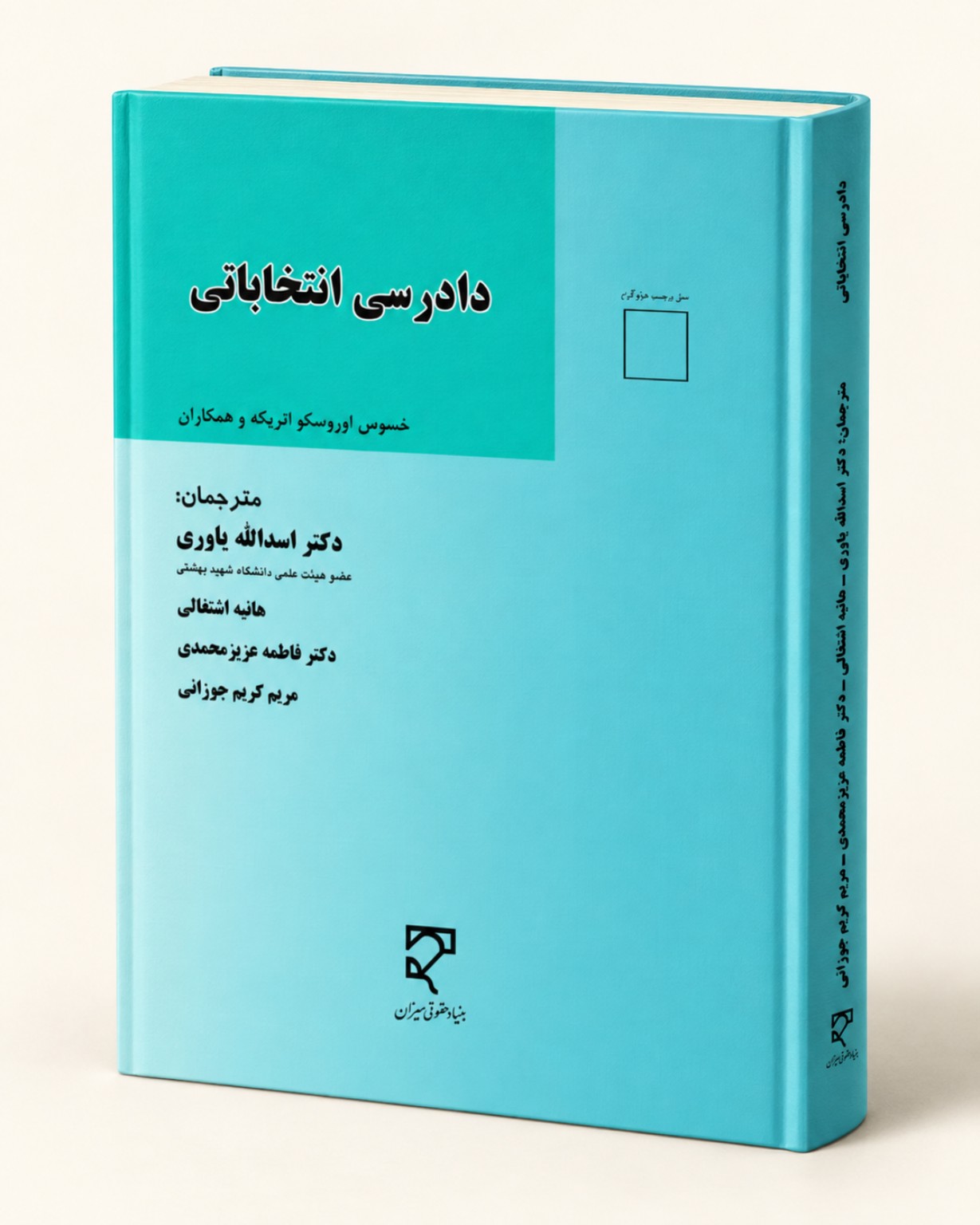
Electoral Justice
Published in Mizan Publication, Iran (book in Persian), 2018
Recommended citation: Azizmohammadi, F., Yavari, A., Ehteghali, H., and Karimi, M. (2018). Electoral Justice. Mizan Publication.
Legal Policymaking Encyclopedia: Separation of Powers and Bureaucracy
Published in Legal Policymaking Encyclopedia, Legal Vice Presidency Publication (in Persian), 2020
Recommended citation: Azizmohammadi, F. (2020). "Separation of Powers and Bureaucracy." In Legal Policymaking Encyclopedia. Legal Vice Presidency Publication.
Explanatory Models of Executive Power: An Introduction to Miniature Leviathan
Published in Azadeh Sadat Taheri Memorial Book (in Persian), 2020
Recommended citation: Azizmohammadi, F. (2020). "Explanatory Models of Executive Power: An Introduction to Miniature Leviathan." In the Azadeh Sadat Taheri Memorial Book.
A Study of Power Engineering in Iran’s Constitutional System
Published in State and Law Journal (in Persian), 2020
Recommended citation: Azizmohammadi, F., and Gorji, A. (2020). "A Study of Power Engineering in Iran's Constitutional System." State and Law Journal.
The Judiciary and Rulemaking Power: Challenges and Solutions
Published in Constitutional Law Magazine (in Persian), 2020
Recommended citation: Azizmohammadi, F., and Gorji, A. (2020). "The Judiciary and Rulemaking Power: Challenges and Solutions." Constitutional Law Magazine.
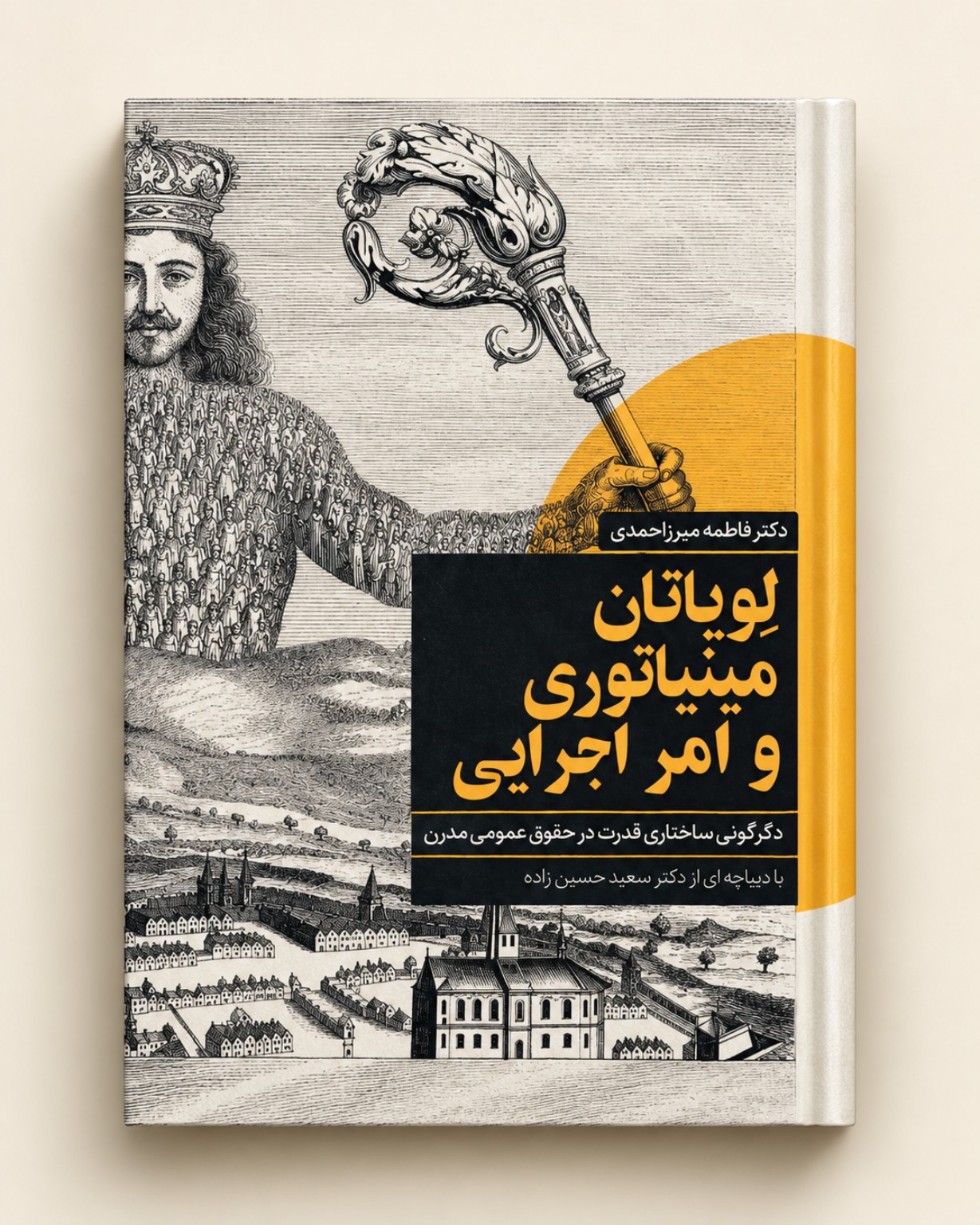
Miniature Leviathan and the Executive: A New Discourse About Modern Public Law
Published in Ganje Danesh Publication, Iran (book in Persian), 2020
Recommended citation: Azizmohammadi, F. (2020). Miniature Leviathan and the Executive: A New Discourse About Modern Public Law. Ganje Danesh Publication.
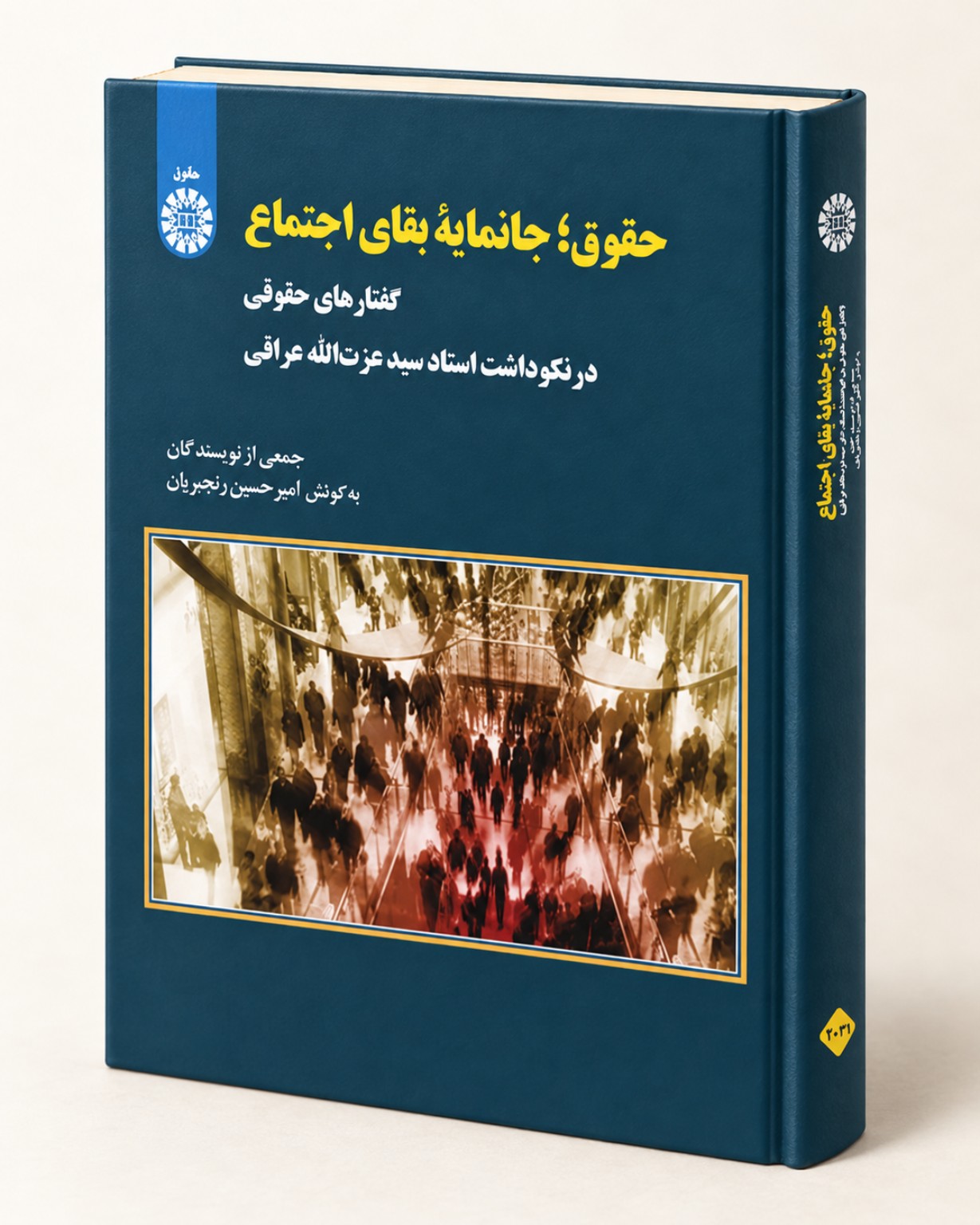
Law: The Essence of Social Survival
Published in Legal essays in honor of Professor Seyed Ezatollah Araghi (contributed volume in Persian), 2021
Contributing author to this commemorative volume of legal essays.
Right to Mental Health and Vulnerable Women
Published in First National Conference on the Right to Mental Health, Shahid Beheshti University (in Persian), 2021
Recommended citation: Azizmohammadi, F. (2021). "Right to Mental Health and Vulnerable Women." First National Conference on the Right to Mental Health, Shahid Beheshti University.
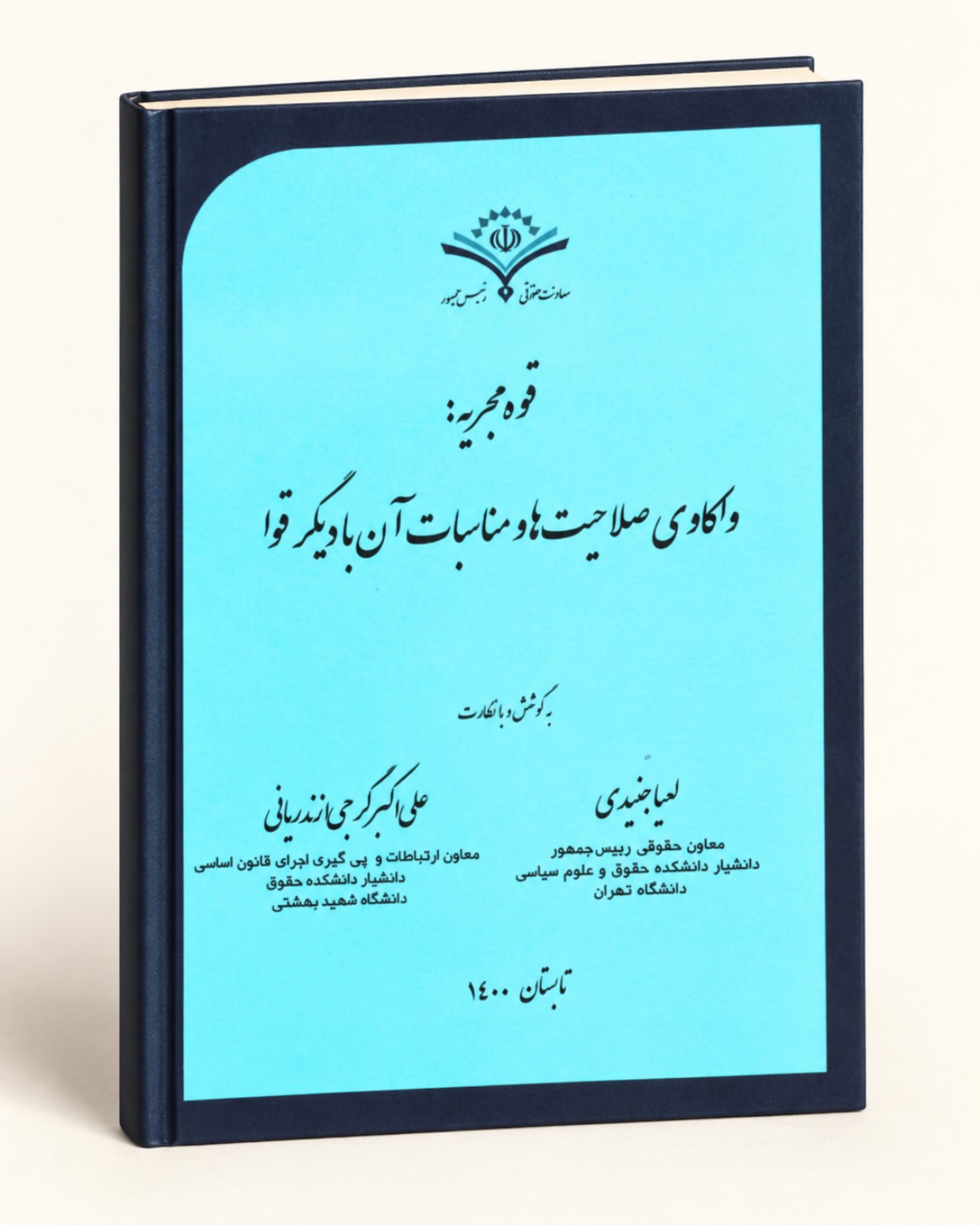
Executive Branch: Analysis of Its Competences and Relations with Other Branches
Published in Legal Vice Presidency Publication, Iran (book in Persian), 2021
Recommended citation: Azizmohammadi, F., and Gorji, A. (2021). Executive Branch: Analysis of Its Competences and Relations with Other Branches. Legal Vice Presidency Publication.
Distribution of Fiscal Powers in Federal Constitutional Systems: A Comparative Study of Germany and the United States
Published in Constitutional Law Magazine (in Persian), 2022
Recommended citation: Azizmohammadi, F. (2022). "Distribution of Fiscal Powers in Federal Constitutional Systems: A Comparative Study of Germany and the United States." Constitutional Law Magazine.
Critical Analysis of Corruption in Iran’s Health Care System and Its Control Strategies Permalink
Published in Shiraz E-Medical Journal, 23(3), e115669, 2022
A narrative review of corruption risks in Iran’s health system and legal, governance, and institutional strategies for addressing them.
Recommended citation: Joulaei, H., Bagheri Lankarani, K., Shahabi, S., Azizmohammadi, F., and Keshavarzian, A. (2022). "Critical Analysis of Corruption in Iran's Health Care System and Its Control Strategies." Shiraz E-Medical Journal, 23(3), e115669.
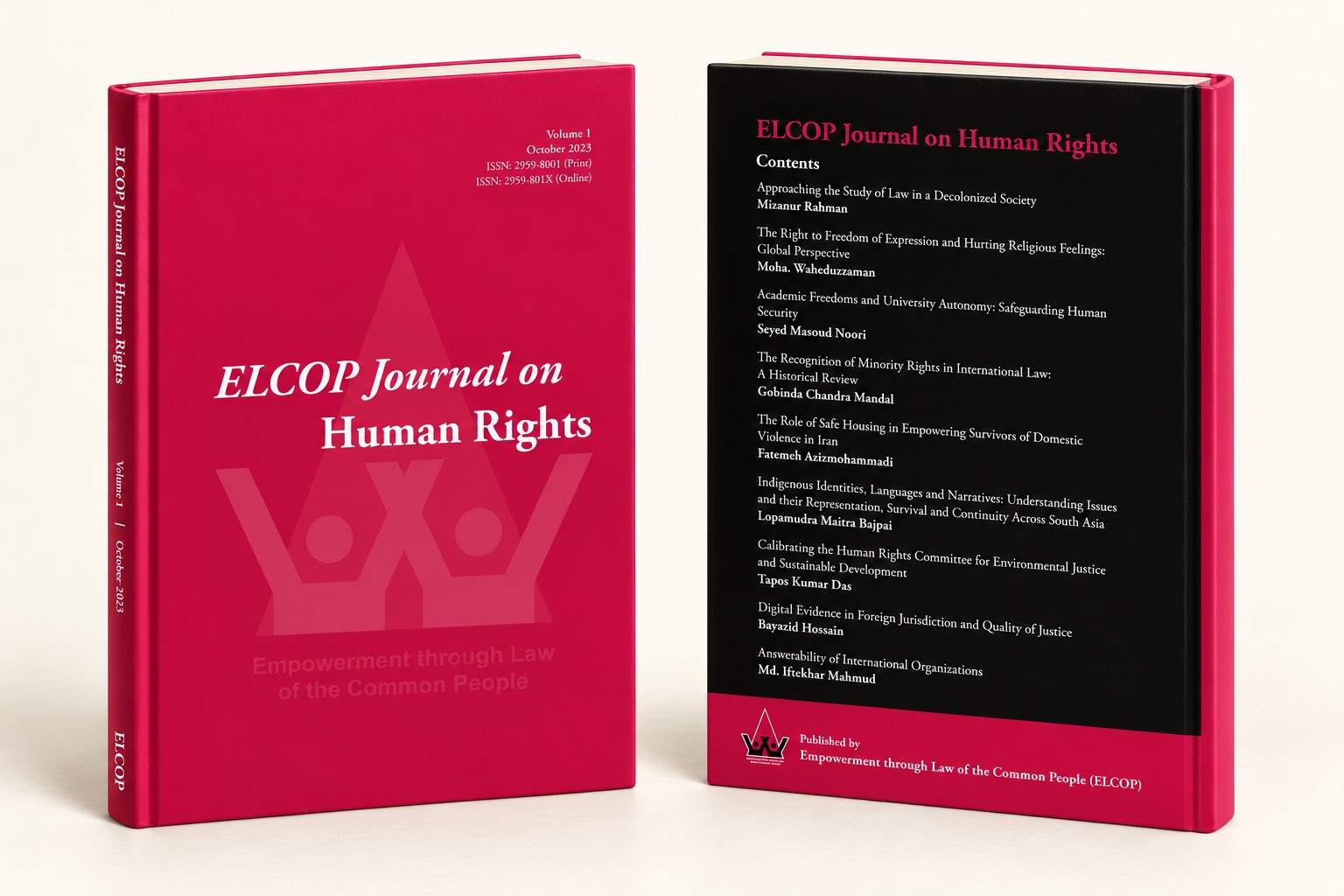
The Role of Safe Housing in Empowering Survivors of Domestic Violence in Iran Permalink
Published in ELCOP Journal on Human Rights, 1(1), 89–102, 2023
This article examines Iran’s Safe Housing Guideline and identifies legal and policy gaps affecting the protection and autonomy of survivors of domestic violence.
Recommended citation: Azizmohammadi, F. (2023). "The Role of Safe Housing in Empowering Survivors of Domestic Violence in Iran." ELCOP Journal on Human Rights, 1(1), 89–102.
When Missing Data Become Missing Rights: AI and Women’s Health in Crisis and Post-Conflict Settings
Published in , 2026
English-language abstract accepted for presentation at the UNESCO Chair Global Congress 2027, associated with the University of British Columbia. Congress: 1–3 February 2027, San José, Costa Rica.
Artificial Intelligence and Women’s Right to Health in Crisis and Post-Conflict Settings: Human Rights Requirements for Data-Driven Decision-Making
Published in National Conference on Artificial Intelligence, Human Rights and Peace (in Persian), 2026
A nine-stage gender-sensitive right-to-health impact assessment for AI in crisis and post-conflict settings. Full text in Persian, with an English abstract.
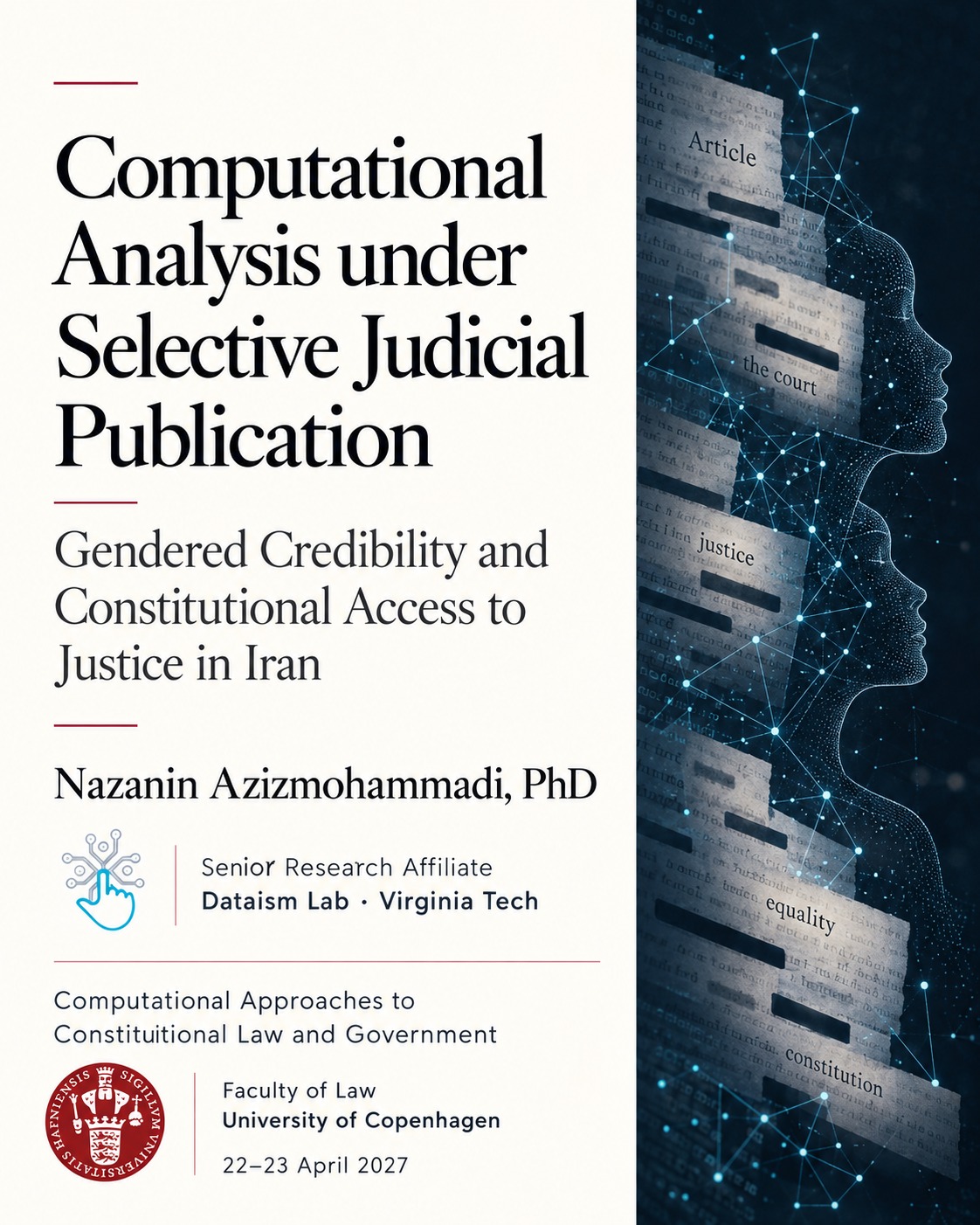
Computational Analysis under Selective Judicial Publication: Gendered Credibility and Constitutional Access to Justice in Iran
Workshop presentation · Faculty of Law, University of Copenhagen · 22–23 April 2027
This paper examines how women’s accounts of sexual violence acquire, retain, or lose credibility in judicial reasoning. Focusing on officially published Iranian decisions concerning rape allegations and related sexual-conduct charges, it asks how a complainant’s narrative is translated into legally significant categories and whether computational analysis can help identify gendered patterns in that process. The constitutional question concerns access to justice: whose account receives serious consideration, which experiences become legally recognisable, and how evidentiary uncertainty is allocated between the person seeking protection and the institutions deciding her claim.
The project treats credibility as a question requiring close examination of the reasoning expressed in a judgment. It asks which statements the court accepts, doubts, or leaves unresolved; what reasons it gives for doing so; and how those assessments relate to the legal classification of the alleged conduct. The inquiry will distinguish an explicit assessment of credibility from an inference supplied by a reader or a language model. This distinction matters because a decision may reject a particular allegation without explaining whether the court considered the complainant dishonest, mistaken, insufficiently corroborated, or unable to satisfy the applicable evidentiary threshold.
A central concern is the distinction between failure to establish coercion and an affirmative finding of consent. The project will examine how these propositions are expressed in the selected decisions and whether they remain separate in computational interpretation. It will also distinguish the rejection of a rape allegation from a determination concerning other sexual conduct. The analysis asks when the reasoning moves between these categories, what textual support exists for that movement, and how the complainant’s procedural position changes. These are questions for investigation within the corpus, rather than findings assumed in advance.
The study uses a bounded collection of officially published judicial decisions. Because publication is selective, the collection cannot establish the national prevalence of a reasoning pattern or provide a complete account of how Iranian courts handle sexual-violence complaints. Unpublished cases, omitted procedural details, and the selection of particular decisions affect what researchers can observe. The project therefore treats the production of the public judicial record as part of its methodology. Claims will remain tied to the decisions examined, with a distinction between identifying an interpretive mechanism and estimating how often it occurs.
Methodologically, the project combines expert legal coding with analysis by a Persian-capable large language model. A legal codebook will guide the identification of allegations, assessments of evidence, statements about credibility, legal classifications, and procedural outcomes. An expert-coded benchmark will be used to evaluate the model’s classifications and interpretations. The analysis will attend to who is speaking in a passage: a complainant, an accused person, a lower court, or a reviewing court. Statements reported within a judgment will not automatically be treated as the deciding court’s own conclusions.
Validation will examine category-level accuracy alongside the substance of interpretive errors. The project will test whether changing prompts alters the model’s treatment of legally significant passages and whether translation changes distinctions preserved in the Persian text. Errors involving consent, coercion, credibility, or the attribution of judicial statements will receive qualitative examination. The purpose is to establish the conditions under which computational assistance can support legal analysis, including the points at which an apparently coherent output requires correction or cannot sustain the proposed interpretation.
The paper connects feminist legal inquiry with constitutional access to justice and computational legal research. Its intended contribution is a method for examining gendered credibility that keeps the complainant’s legal position, the judgment’s reasoning, and the limitations of the available record in view. It will assess what language-model analysis can reliably identify, what remains dependent on expert interpretation, and how selective publication shapes the resulting knowledge. It also treats corpus construction, coding, and translation as choices that influence the legal questions researchers can answer, rather than neutral preparatory steps.
talks
Right to Mental Health and Vulnerable Women
Published:
Women’s Rights after the Islamic Revolution
Published:
Voices Unheard: Amplifying the Rights of Vulnerable Women in Iran through Digital Innovation
Published:
Artificial Intelligence and Government Transformation: In Search of Innovative Regulation
Published:
teaching
Comparative Administrative Law and Administrative Law
Teaching assistant, Shahid Beheshti University, 2018
Teaching assistant in Comparative Administrative Law with Professor Mohammad Hossein Zarei (2016–2018) and in Administrative Law with Professor M. Jalali (2014).
Constitutional Law, Administrative Law, and Comparative Administrative Law
Instructor, Bar-association and university programs, 2020
Courses and professional instruction delivered between 2015 and 2020 through the Central Bar Association University, Virtual School of Public Law, Islamic Azad University, and Chabahar International University.
Comparative Constitutional Law, Foundations of Public Law, and Women’s Right to Health
Instructor, University of Science and Culture, 2023
Courses taught from 2018 to 2023. Teaching addressed public and constitutional law, comparative institutional design, and women’s right to health.